


About the Course
As our clients teach us, grief therapy typically requires more than empathic listening, while waiting for time to heal the wounds of loss. This 2-day workshop offers a close process analysis of two cases, as vehicles for demonstrating creative interventions tailored to the unique needs of quite different clients, one dealing with a normative loss of a partner to illness in later life, and the second with the traumatic loss of not one but two children in the perinatal period.
On Day 1, we meet Loretta, contending with profound loneliness in the aftermath of the death of her husband of over 50 years. In keeping with a Continuing Bonds approach to accessing the relationship with the deceased as a resource in grief therapy, presenter Robert Neimeyer invites a spontaneous and appreciative Re-membering Conversation about their special connection, followed by a Symptom Dialogue that facilitates Loretta’s conversation with a personified version of her loneliness to learn more about its function in her life now. Participants are then given clear instructions for both techniques, with an opportunity to practice them under the mentoring of faculty.
On Day 2, we meet Christina, following a tragically compounded bereavement in the context of infertility treatment. After retelling the traumatic story of multiple loss, Christina focuses on the struggle to retain attachment to a dead child she could scarcely hold outside her womb, and Neimeyer guides her in an Embodied Dialogue to help install a more internalized bond. Participants will then have the opportunity for mentored practice with this core technique, as well as to discuss theory and research supporting both days of training.
Course Objectives
Summarize a Continuing Bonds approach and its implications for grief therapy
Apply Re-Membering Conversations as a means of engaging the deceased as an ally in therapy
Implement the Symptom Dialogues technique to discover an unexpected source of support in grief
Analyze a case of traumatic loss to identify concrete and abstract triggers for re-traumatization
Practice the Embodied Dialogue technique to more fully integrate the meaning of the loss and of the bond with the deceased.
Who Should Attend
Helping professionals, community/outreach workers, befrienders/volunteers, pastoral staff and others, who are keen in rendering bereavement support to those suffering from suicide-related loss.
Award
Participants who meet 75% class attendance will be awarded a Certificate of Completion by Portland Institute for Loss and Transition & Academy of Human Development.
For certification enquiries, please email carolyn@portlandinstitute.org
Your Trainer
Dr Carolyn Ng
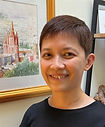
Dr Carolyn Ng, PsyD, FT, MMSAC, RegCLR maintains a private practice, Anchorage for Loss and Transition (for more information, please visit: www.anchorage-for-loss.org). She also serves as Associate Director and Faculty with the Portland Institute for Loss and Transition in Portland, OR, United States. Previously, she was a Principal Counsellor with the Children’s Cancer Foundation in Singapore, specialising in cancer-related palliative care and bereavement counselling support. She is a registered counsellor, master clinical member and approved clinical supervisor with the Singapore Association for Counselling (SAC). She is also a Fellow in Thanatology (FT) registered with the Association of Death Education and Counselling (ADEC), USA; as well as a consultant to a cancer support and bereavement ministry in Sydney, NSW, Australia.
She is certified in Solution-Focused Brief Therapy and Narrative Therapy as well.
Carolyn first graduated with Bachelor of Arts from the University of New South Wales, Australia, majoring in psychology, followed by Master of Social Science (Counselling) from the Edith Cowan University, Australia and a Master of Arts in Pastoral Ministry (Conflict Management) from the Trinity Theological Seminary, USA. She subsequently completed her doctoral training in psychology with the California Southern University, USA. She is also trained in the Critical Incident Stress Management (CISM) by the International Critical Incident Stress Foundation, USA, community crisis response by the National Organisation for Victim Assistance (NOVA), USA, as well as Applied Suicide Intervention Skills Training (ASIST) by LivingWorks, Canada. She is a trained end-of-life doula and a certified Advanced Care Planning facilitator as well.
Her wide counselling experiences cover youth delinquency issues, marital issues, family violence issues, mental health issues, incarceration issues, grief and loss issues, and crisis interventions. She has varied supervisory experiences with such helping professionals as counsellors, social workers and therapists in diverse settings as well. She also conducts training workshops and presents on various topics in English, Mandarin and Cantonese, as invited by different organizations both in Singapore and other countries like Malaysia, Taiwan, Bhutan, Australia and United States over the years.
Testimonials
To be Updated
To be Updated
To be Updated

