


About the Course
In this 2-day workshop, we will begin by considering how we can quickly assess our clients’ needs in terms of the 4-dimensional model of Meaning-Focused Grief Therapy in bereavement, featuring obstacles to processing the event story of the death, accessing the back story of the relationship with the deceased, revising the personal story of the mourner’s own sense of identity, and sorting through the existential story of life in the shadow of loss. We will then review very recent research that traces the impact of avoidant and approach-oriented coping on meaning making and symptomatic outcomes in the case of traumatic losses as through suicide and drug overdose as well as the utility of a validated measure of client needs in dealing with sudden dead bereavement. Finally we will explore various meaning-oriented techniques that help mourners make sense of the loss in the context of the changed story of their lives but also make sense of themselves as survivors in light of it.
Course Outline
Meaning-Focused Grief Therapy: A Roadmap for Intervention
Coping with Crisis: Avoidance vs. Approach
Finding a Focus: Identifying Client Needs in Traumatic Loss
The Power of Presence: Constructing a Relational Container
Loss Epicentres in life: An Experiential Practice
Restorative Retelling: From Principles to Practice
Conversing with the Canvas: Analogical Listening to the Heart of Grief
Directed Journaling: Writing for Wellbeing
Course Objectives
Describe the link between different styles of coping and bereavement outcomes following traumatic loss;
Distinguish between therapeutic “presence” and “absence” in the process of therapy;
Summarize recent research on the expressed needs of survivors of sudden bereavement and their implications for risk of prolonged grief;
Apply My Loss Epicentres in Life as a form of loss history review to facilitate integration;
Implement Restorative Retelling procedures for mastering the event story of the loss;
Execute Analogical Listening to help clients make better sense of their emotions; and
Distinguish between emotion-focused, sense-making and benefit-finding approaches to journaling and highlight the role of each.
Who Should Attend
All counsellors, healthcare workers, social workers, psychologists, teachers and principals, pastoral staff, and people involved in the helping profession.
Award
Participants who meet 75% class attendance will be awarded a Certificate of Completion by Portland Institute for Loss and Transition & Academy of Human Development.
Your Trainer
Dr Carolyn Ng
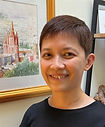
Dr Carolyn Ng, PsyD, FT, MMSAC, RegCLR maintains a private practice, Anchorage for Loss and Transition (for more information, please visit: www.anchorage-for-loss.org). She also serves as Associate Director and Faculty with the Portland Institute for Loss and Transition in Portland, OR, United States. Previously, she was a Principal Counsellor with the Children’s Cancer Foundation in Singapore, specialising in cancer-related palliative care and bereavement counselling support. She is a registered counsellor, master clinical member and approved clinical supervisor with the Singapore Association for Counselling (SAC). She is also a Fellow in Thanatology (FT) registered with the Association of Death Education and Counselling (ADEC), USA; as well as a consultant to a cancer support and bereavement ministry in Sydney, NSW, Australia.
She is certified in Solution-Focused Brief Therapy and Narrative Therapy as well.
Carolyn first graduated with Bachelor of Arts from the University of New South Wales, Australia, majoring in psychology, followed by Master of Social Science (Counselling) from the Edith Cowan University, Australia and a Master of Arts in Pastoral Ministry (Conflict Management) from the Trinity Theological Seminary, USA. She subsequently completed her doctoral training in psychology with the California Southern University, USA. She is also trained in the Critical Incident Stress Management (CISM) by the International Critical Incident Stress Foundation, USA, community crisis response by the National Organisation for Victim Assistance (NOVA), USA, as well as Applied Suicide Intervention Skills Training (ASIST) by LivingWorks, Canada. She is a trained end-of-life doula and a certified Advanced Care Planning facilitator as well.
Her wide counselling experiences cover youth delinquency issues, marital issues, family violence issues, mental health issues, incarceration issues, grief and loss issues, and crisis interventions. She has varied supervisory experiences with such helping professionals as counsellors, social workers and therapists in diverse settings as well. She also conducts training workshops and presents on various topics in English, Mandarin and Cantonese, as invited by different organizations both in Singapore and other countries like Malaysia, Taiwan, Bhutan, Australia and United States over the years.
Testimonials
To Be Updated
To Be Updated
To Be Updated
To Be Updated
To Be Updated
To Be Updated

